Inclusion+ Project Dialogue Forums Empower Students and Drive Report on Erasmus+ Mobility Barriers
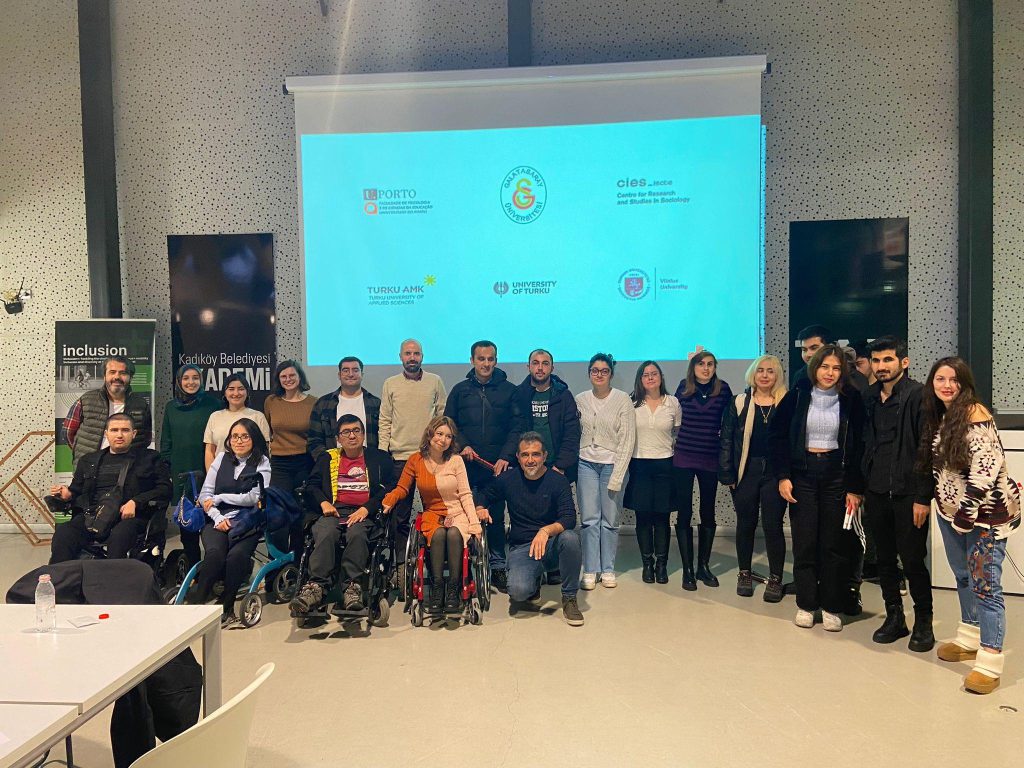
Between December 2024 and May 2025, the Inclusion+ project team (2023-2026) organized a series of Dialogue Forums, hosting two events across each partner country: Portugal, Lithuania, Finland, and Turkey. These sessions brought together around 40 participants, providing participatory and inclusive spaces for students with disabilities and caring responsibilities to share their experiences, perspectives, and challenges related to international mobility. These spaces proved highly important for understanding the specific needs of students and identifying ways to support institutions in fostering more inclusive environments.
The forums held opened up opportunities for interaction with the students, gaining deeper insights into their views on international mobility. As a direct outcome of these dialogues, the contributions and real-life narratives collected were compiled into the comprehensive document Storytelling Report: Barriers to Participation in Erasmus+ Mobilities: Who Are These Students and What Are Their Needs?. This document highlights the barriers faced by these students and serves as a strategic tool to document and analyze their stories, transforming them into visual, objective, and actionable insights for policymakers, institutions, and program administrators. The report reveals that these barriers do not exist in isolation but are deeply interconnected, forming a cycle that discourages participation. For students with disabilities, the study mapped six core challenges:
- Vague and incomplete maps: A lack of accessible and reliable pre-departure information regarding disability support, housing, and transportation.
- The hidden costs of inclusion: Funding models that rarely account for the actual costs of personal assistants, adapted equipment, or essential health needs.
- Cultural gaps and misperceptions: Stereotypes and unfamiliar local support systems that cause disorientation during crises.
- The emotional burden of self-advocacy: Anxiety caused by continually having to justify and fight for one’s own support needs within rigid bureaucracies.
- When “accessible” cities fall short: Poor urban infrastructure, unsuitable sidewalks, and unreliable public transport systems.
- Digital barriers: Online learning tools incompatible with assistive technologies, which reduces academic autonomy.
Similarly, the report exposes the overlooked reality of students with caring responsibilities, whom mobility programs frequently ignore by assuming an idealized, fully independent student profile. The primary barriers identified for this group include navigating without tailored guidance, insufficient scholarships for households with dependents, cultural stereotypes (where caregiving students face guilt or disapproval), heavy emotional weight, a lack of family-friendly housing or childcare services, and social biases that lead these students to internalize the idea that international mobility is simply “not meant” for them.
The ultimate goal of this report is for these findings to inform and guide policymakers, higher education institutions, and mobility program administrators in building a more accessible academic ecosystem, proposing structural changes at both the institutional and city levels.