Portugal: Multiplier event brings together students, higher education institutions and municipalities to tackle inclusion challenges in Erasmus+
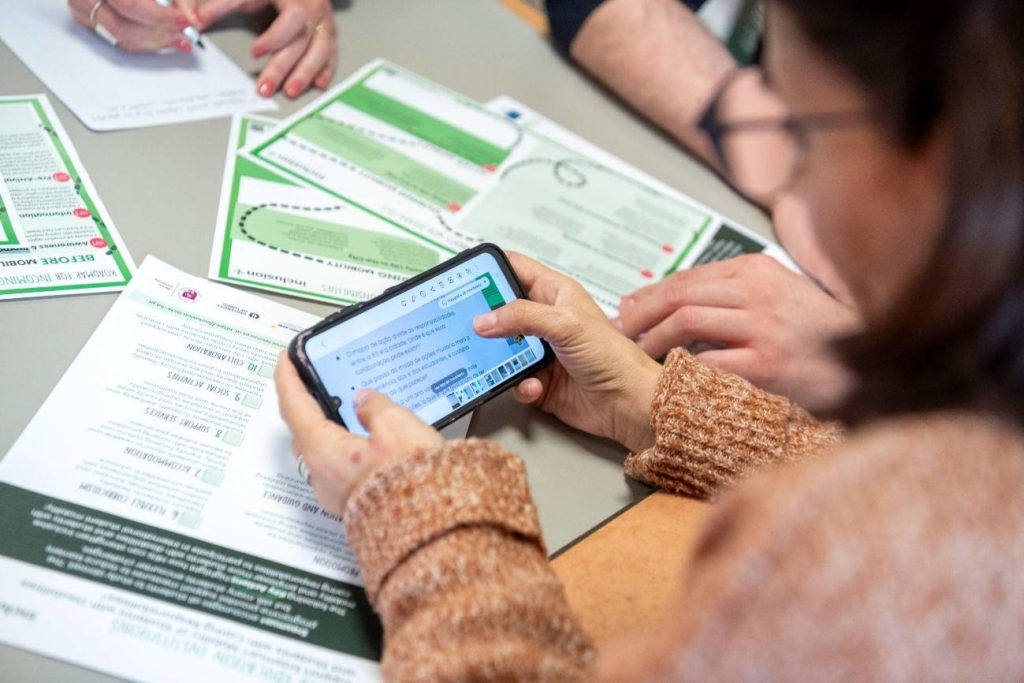
On 13 May 2026, Portugal hosted the multiplier event of the Inclusion+ project, bringing together around 40 representatives from higher education institutions across the country, as well as representatives of municipal authorities, to discuss inclusion in Erasmus+. Held in a hybrid format, the event marked the culmination of three years of work funded by the Erasmus+ Agency
The afternoon opened with one of the most powerful moments of the day: first-person testimonies from students with disabilities and students with caregiving responsibilities. They shared the barriers they encountered while also offering concrete proposals for building a more inclusive Erasmus+.
Next, project coordinator Thais França (CIES-Iscte), together with team members João Caramelo (University of Porto) and Cosmin Nada (CIES-Iscte), presented the project’s main outcomes, developed in partnership with Finland, Lithuania and Turkey. Highlights included the tools co-created with students during the Collabs: a roadmap for higher education institutions and municipalities; a set of factsheets, and a prototype of an APP designed with and for students with disabilities to help them navigate their host city with autonomy and confidence.
Participants then split into small groups to explore these tools in depth, assess their relevance to their professional contexts, and identify potential collaborations between universities and municipalities.
The event concluded with an open conversation circle, where common challenges were brought to the surface: a lack of specialised human resources, insufficient communication between services, invisible barriers in selection processes that reinforce pre-existing inequalities and the additional difficulties faced by students with disabilities or caregiving responsibilities.
Some institutions noted that they had never received a mobility application from these students – not because they do not exist, but because many do not even imagine Erasmus+ could be for them. To address this, participants highlighted the importance of positive testimonies to make successful experiences visible and inspire others.
Finally, participants emphasised the need to build effective networks – communities of practice – that bring together university support teams and municipal services to share experiences and collective learning and create sustainable, long-term mechanisms for inclusive mobility, ensuring that no student is left behind.
Despite the many challenges discussed, the event ended on an optimistic note, with a shared commitment to take these issues further, increase their visibility, and influence policies that can guarantee a truly inclusive academic mobility experience.